
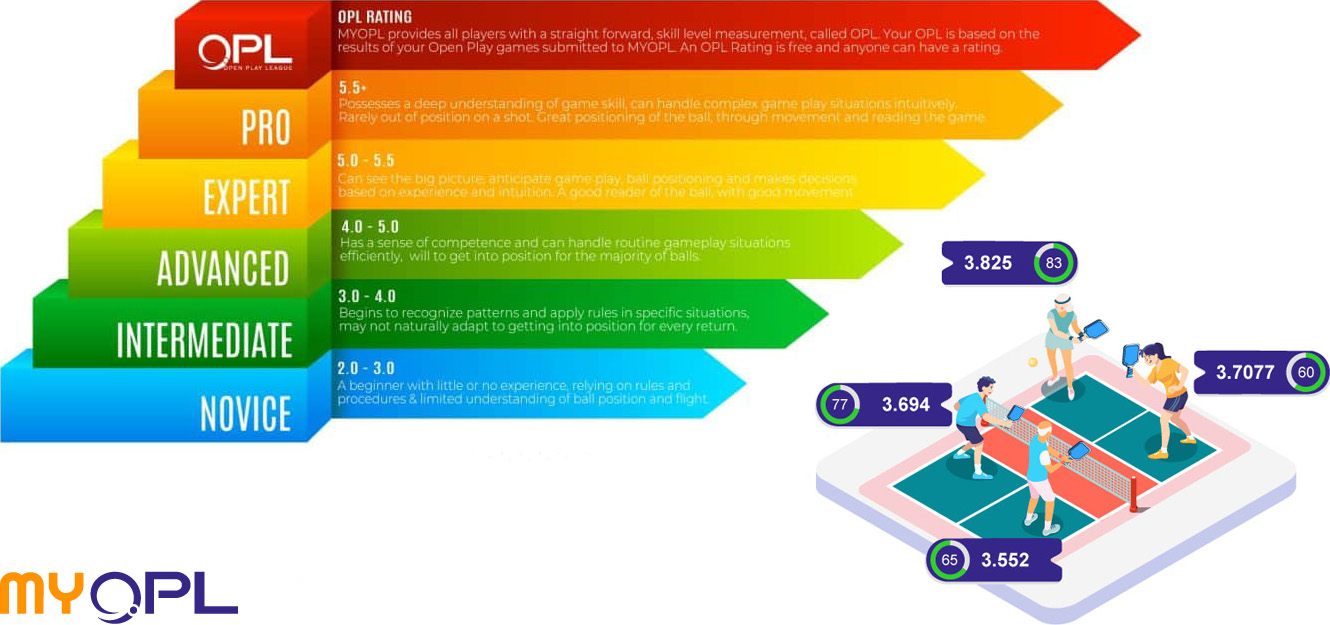
Pickleball is a social sport played mostly for fun, making the OPL Rating the perfect way to get a skill assessment based on your recreational play. This rating represents your current skill level from your “open play” games. The OPL Rating System is similar to the widely used DUPR system in that it’s designed to rate players based on recreational and league play, not just sanctioned tournaments. This is a key differentiator from traditional systems focused solely on competitive event outcomes.
Here is a detailed comparison:
OPL Rating vs. Other Systems
|
Feature
|
DUPR (Dynamic Universal Pickleball Rating)
|
UTPR (USA Pickleball Tournament Player Rating)
|
UTR-P (Universal Tennis Rating – Pickleball)
|
|
|---|---|---|---|---|
| Data Source | All play (recreational and open play leagues) | All play (recreational, league, tournament) | Only USA Pickleball sanctioned tournaments | All play types (verified/unverified distinction) |
| Algorithm | A separate, more sophisticated algorithm that builds upon Elo’s foundations. | Modified ELO algorithm (factors in opponent strength, scores, recency) | Based on wins/losses in sanctioned events (scores not included) | Based on points won, not just games (updates every 24 hours) |
| Scale | 2.0 to 8.0 | 2.0 to 8.0 | 1.0 to 6.0+ (being phased out for UTR-P) | 1.0 to 10.0 |
| National/Global Reach | NEW: Primarily used within its own MyOPL leagues and website. Designed for Global adoption. | Widely accepted globally; official rating system of the PPA Tour and Global Pickleball Federation | Official rating system of USA Pickleball (national governing body, but being replaced) | Partnership with USA Pickleball; used for many sanctioned tournaments |
Key Takeaways
- Inclusivity of Play: Both OPL and DUPR prioritize including scores from everyday recreational and league play, making them accessible to a much broader range of players than the older, tournament-focused UTPR system.
- Algorithmic Nuance: Like DUPR and UTR-P, OPL uses a data-driven algorithm that factors in opponent strength and consistency to provide a nuanced rating.
- Recognition: The main difference lies in recognition. DUPR and UTR-P are widely adopted across national and global federations and major tours, whereas the OPL rating system appears specific to the
myopl.netplatform and its associated leagues. - Focus on Consistency: The OPL system specifically notes its focus on player consistency and quick adjustment of ratings after significant results (upsets), which helps ensure the rating remains current and accurate.
Ultimately, the OPL system is an internal rating for users of its platform, while DUPR and UTR-P are generally used as the industry standards for competitive and social play measurement.
The primary difference is the OPL rating system is specific to the myopl.net platform and implemented as the global standard for recreational pickleball ratings, while DUPR is a widely adopted, global standard for competitive and tournament pickleball ratings.
Both systems use a modified ELO algorithm and include results from all types of play, but key differences exist in their scope, implementation, and recognition:
- Global Recognition: The OPL rating system is open to all pickleball players globally as the industry standard rating system for recreation pickleball players and is free to anyone who would like a Pickleball Rating. DUPR is the official rating system for major professional tours and the Global Pickleball Federation, making it the industry standard for most competitive and social play worldwide.
- Algorithm Specifics: Both use a modified ELO system, the OPL system emphasizes volatility and rating deviation in its algorithm to quickly adjust for upsets and surges in skill, which is a nuanced approach to ensuring the rating stays current. DUPR also uses similar factors (opponent strength, recency, scores) to adjust ratings dynamically.
- Scale: DUPR uses a scale of 2.0 to 8.0, OPL uses the same rating scale of 2.0 to 8.0.
- Verification and Reliability: MYOPL provides a Reliability Score (a percentage) to indicate how trustworthy a rating is based on the number and recency of matches played. Both MYOPL’s and DUPR’s reliability scores is a highly visible, distinct metric for players.
- Score Specificity: MYOPL’s current algorithm determines rating changes based on whether a player performs better or worse than the expected score for a match, meaning a player can lose a match but still see their rating increase if they scored more points than predicted against a higher-rated opponent. The DUPR’s system also considers match performance and opponent strength, but the specifics of its score-based adjustments are often changed and the algorithm adjusted.